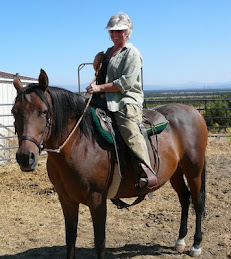
Sunday, March 10, 2013

THE SECOND AMENDMENT SHOULD NOT BE INFRINGED - IN MY VIEW

Published in the Bend Bulletin, Sunday, March 10, 2013


THE SECOND AMENDMENT SHOULD NOT BE INFRINGED
By Rebecca Wagner
Published: March 10. 2013 4:00AM PST
The Second Amendment states: “A well regulated Militia, being necessary to the security of a free State, the right of the people to keep and bear Arms, SHALL NOT BE INFRINGED." (Emphasis mine.)
It occurred to me recently that the word “infringed" is significant. My computer’s definition of “infringe" is: “act so as to limit or undermine (something); encroach on as in his legal rights were being infringed."
Webster’s Encyclopedic Dictionary says: “Infringe" is to “fail to conform with; violate ... encroach."
“Encroach" is defined as: “to overstep the limits of what belongs to or is due to one ... to make gradual inroads ..."
Well, guess what is happening to the Second Amendment: All the restrictions, prohibitions and regulations the anti-gun movement has already implemented or wants to implement are INFRINGING on it. They are encroaching, acting so as to limit or undermine, making gradual inroads against the Second Amendment.
Until or unless this is changed, not by “executive order," but legally and through the proper congressional channels and ratified by the states, there is nothing in the Second Amendment about what type, quality or quantity of “arms" “the people" may bear, and any attempt to limit citizens’ access, type, quality or quantity of arms is an obvious infringement of the Second Amendment, and it must not be tolerated.
I have seen three quotes recently that indicate the authors of the amendment defined “militia" as the total citizenry, and that the purpose of the amendment was to give citizens parity with the government’s military as a safeguard against tyranny. Yes, weapons have changed a lot in the last 200 plus years; with today’s military firepower, parity is no longer possible. The government will have the edge in any conflict with the citizenry.
So think about this: If gun control proponents manage to circumvent the U.S. Constitution and Congress by passing the proposed gun ban, and if our government moves from the proposed universal registration to nominal criminalization of the citizenry who refuse to “voluntarily" turn in their weapons (and there will be millions), and if the government then moves on to enforced confiscation, we will see in this country many more incidents of shameful government abuse and atrocities such as Waco and Ruby Ridge.
This is becoming obvious to many reasonable people who are becoming fearful of an ever larger more dictatorial government.
As an example, one of my good friends — a very intelligent, highly educated older woman who is just now getting her concealed carry permit — actually said to me recently that while she never expected to say it, she fully expects to end her life being shot by her government.
Let me repeat that: BEING SHOT BY HER GOVERNMENT! And when I have relayed this sentiment to other friends in the same situation, they agree with it.
When ordinary, reasonable, tax-paying, law-abiding people make this kind of statement, just what does that say about the state of foreboding and division in this endangered republic?
Postscript: I’m a small woman. In my almost 70 years, I’ve had to use my wits more than once to defuse a potentially dangerous situation.
Joe Salazar recently said on Fox News that women shouldn’t have the right to shoot a gun at a potential assailant, that they should fake diseases or vomit to stop a rapist. It might work; many years ago while traveling alone in Europe, where I had no weapon available but my own brain, I personally stopped an intoxicated potential rapist by deliberately making him laugh, thereby making him human again and apologetic about what he was about to do.
But in many situations, guns can be an essential tool for women against home invasions, muggings and rapists. Here in this country, where guns are still legal, they are a great equalizer for us, and their availability must be preserved.
— Rebecca Wagner lives in Powell Butte.

Sunday, February 21, 2010

AD FOR A THROWAWAY KITTEN

FOUND: One scrawny, starved, throwaway black kitten, about four weeks old, down in one of my sheep fields about 20 feet from the road.  Blinded by eyes glued shut with pus, caked with terror-loosened feces, it couldn't do anything but scream, which led me to it.

I followed its cries to find it struggling in circles in the tall dry grass, too small for me to see until I was upon it, but big enough to be a target for a hawk.  Not much bigger than a mouse, really; nothing but skin and bone and black fur that looked as though it had already been chewed on by something, it was anything but appealing, and too young to survive on its own.

Why did you do it?  Couldn't you wait until it was big enough to be claimed in front of the grocery or feed store?

I've had a lot of throwaways appear on my corner in the eight summers we've lived here, and most of them didn't make it for one reason or another.  This one might; it is in a box in my kitchen, bathed, eyes anointed, fed milk through an eye dropper.  I couldn't just leave it there for the hawks.

But maybe that's what you were counting on, you who threw it out of your car or truck, that someone would find it who had the heart you lack.

Oh well, a farm can't have too many cats. (Perhaps you thought.)  I'll put it in the barn when it is big enough to eat with my barn cats, and it will have to get along. If anybody wants to give it a better life, please call XXX-XXXX.

Rebecca Just Wagner, 1996

Postscript:  I ran this ad in the local newspaper.   It generated a lot of calls, and the kitten was placed in a loving home.  The end.  ;-)

Saturday, July 26, 2008

THREE CREEKS LAKE, THE WOLVES' VIEW

"Do you want to go to Three Creeks?" our humans said. We leaped up, smiling widely, panting, pacing.

"Look," said the humans, "They know what we mean."

It always amazes them that we understand what they say. Of course we do, more than they realize. We watched them pack the car, leaving a disturbingly small place for us in the very back of it. The rest of the car was stuffed to the roof with the things they think they need to have fun, when we are all they really need. We figure out how to lie in the car, side by side, crosswise, so that we both fit into a space for one.

It takes a long time to get to Three Creeks. They roll the windows down as we climb higher, and we poke our noses outside and begin to catch the scents: pine, deer, squirrel. We are ever alert; we protect our humans, guide them, lead the way on the trails. We chase off the chipmunks, run in the creek and lake, get wet and sandy, roll in pine needles.

We see dogs approaching; our hackles stand straight up, and our humans snap on our leashes. We threaten and strain on the leashes, but can't reach the dogs or the other humans. At least they never get too close. It's our job to keep all others away.

Our humans eat a lot. We put our wet chins on their knees hoping they'll give us whatever they are eating. We never refuse an offering; to do so might mean less next time. We even eat bananas and grapes. Oranges, apples. But of course we prefer eggs, bacon, cheese. Large bones. Ice cream. They always share what they're eating. And they eat all the time, not twice a day like they feed us. We like breads the best, and cookies. One of us stole a whole loaf of hot, drooly bread once, but got caught and lost it. The smaller human got angry and took it away.

They're living in a small round den up here, but they won't let us in. We can see through parts of it, and we push on the soft covering with our noses. They open it up a little and we shove our heads in as far as we can; they hug us but complain about our hair, and they tell us that our toenails would poke holes in their floor.

We position ourselves at the two openings, on our pads that swelled up when they opened small orange sacks. They call them Thermarests and say we are lucky to have them. It is warmer and softer on the pads, but they aren't as big or soft as the ones we have in our big den at home.

We ran and ran today, jumped up rocks, ran to the edge of cliffs, followed our noses, chased sticks they threw out into the lake. They couldn't get them themselves. We always knew where our humans were; we kept them in sight. Mustn't let them get lost.

Then suddenly they said we had to jump into the back of the car again and go. Jump! Please! After the day we've had?? We hardly move once we're on the road again; too tired. We can still smell all the places we've been; it's stuck to our fur.

When we reach the large den it's dark, and we can hardly walk. We limp into the den and fall onto our pads to sleep. This morning we waited outside beside the car, but they locked us up in our pen and drove another car.

They tell us we'll get to go to Three Creeks again soon!

Rebecca Just Wagner, October, 2001